Month: October 2026

Advanced Depressurization Systems Help Manage Subsurface Vapor Movement

Maintaining safe and comfortable indoor environments requires effective management of environmental conditions beneath building foundations. Subsurface vapor movement is an important consideration during construction and property development, making reliable mitigation solutions valuable for long-term building protection. Advanced depressurization systems provide an effective approach by helping control soil gas movement and directing unwanted vapors away from occupied indoor spaces. Through thoughtful planning, professional installation, and dependable system design, these solutions support healthier indoor environments and improve overall building performance.

Effective Depressurization Supports Subsurface Vapor Management

Properly designed depressurization systems help manage pressure differences beneath building foundations. By creating controlled airflow pathways, these systems encourage subsurface vapors to move toward designated collection and discharge points rather than entering occupied spaces.

  • Pressure Management: Maintain controlled pressure conditions beneath building foundations.
  • Vapor Collection: Direct subsurface vapors toward designated extraction points.
  • Airflow Control: Establish effective pathways for managing unwanted soil gases.
  • Foundation Protection: Support improved environmental conditions beneath structural surfaces.
  • Indoor Environment Support: Help reduce the potential for unwanted vapor entry into occupied areas.

Advanced System Components Improve Operational Efficiency

Navigating Construction

Modern depressurization systems combine carefully selected components to provide consistent vapor management performance. Proper coordination between extraction points, piping networks, and ventilation equipment helps create an effective solution suited to individual building requirements.

These integrated components contribute to dependable operation and long-term environmental protection.

  • Extraction Points: Collect subsurface vapors from strategically selected foundation areas.
  • Ventilation Equipment: Support continuous movement of collected vapors through designated pathways.
  • Piping Networks: Transport extracted gases toward appropriate outdoor discharge locations.
  • Sealing Materials: Help limit unwanted vapor entry through foundation openings and joints.
  • Monitoring Equipment: Support performance evaluations and consistent system operation.

Professional Installation Encourages Reliable Results

Successful depressurization depends on proper system design and accurate installation. Experienced professionals evaluate foundation conditions, understand subsurface requirements, and select appropriate equipment to establish effective vapor management throughout the property.

Their technical expertise helps ensure that every component contributes to the overall performance of the protective system.

  • Site Evaluations: Assess subsurface conditions before developing suitable solutions.
  • Customized Designs: Adapt system configurations to individual building layouts.
  • Expert Installation: Apply appropriate techniques for dependable system performance.
  • System Testing: Evaluate pressure conditions and extraction effectiveness.
  • Routine Maintenance: Support continued functionality through scheduled inspections.

Long-Term Building Protection Encourages Confidence

Integrating depressurization systems into construction and property improvement projects provides valuable opportunities for maintaining comfortable indoor environments. Consistent monitoring and appropriate maintenance help preserve system effectiveness while supporting changing property requirements.

  • Improved Indoor Conditions: Help maintain favorable environments within occupied spaces.
  • Structural Compatibility: Integrate protective systems with suitable foundation designs.
  • Consistent Performance: Maintain effective vapor management through regular evaluations.
  • Flexible Applications: Support different residential and commercial construction requirements.
  • Preventive Protection: Address subsurface vapor management as part of responsible property planning.

Supporting Safer Buildings Through Advanced Solutions

Advanced depressurization systems offer valuable support for managing subsurface vapor movement and protecting indoor environments. Through professional assessments, effective equipment, and reliable installation practices, property owners can strengthen building protection and encourage lasting performance. Those interested in exploring professional vapor management solutions can visit https://actoc.com/utah/ to discover additional information about suitable environmental protection services

Creative Tailors Turn Fabric Selections Into Elegant Fashion Statements

Beautiful clothing begins with the thoughtful selection of fabric and the creative vision to transform it into something exceptional. Skilled tailors understand how texture, color, weight, and drape influence the appearance of a finished garment. By combining technical expertise with artistic imagination, they create clothing that reflects personal taste, comfort, and sophistication. Every carefully chosen material offers opportunities to develop distinctive designs that celebrate individuality while maintaining timeless elegance.

Fabric Selection Inspires Creative Designs

Choosing the right fabric is an essential part of successful tailoring. Different materials offer unique qualities, allowing tailors to explore various silhouettes, finishes, and styling possibilities. Understanding these characteristics helps transform an ordinary piece of fabric into an attractive and well-balanced garment.

Exploring Different Fabric Qualities

Each material contributes something special to a design, from soft textures to structured shapes. Skilled tailors consider how fabrics move, feel, and complement the intended style before beginning construction.

  • Soft cotton for everyday comfort
  • Smooth silk for elegant finishes
  • Breathable linen for relaxed sophistication
  • Textured wool for structured garments
  • Lightweight blends for versatile styling

These choices help create garments that combine practical comfort with distinctive visual appeal.

Colors Create Memorable Fashion Statements

Color selection gives clothing its personality and emotional character. Tailors use complementary shades, subtle contrasts, and harmonious combinations to highlight garment details and create attractive designs. The right color can make a simple silhouette feel sophisticated, expressive, and memorable.

Choosing Colors With Confidence

A balanced color palette makes garments easier to style for different occasions. Classic shades provide versatility, while vibrant tones and delicate pastels offer opportunities for individual expression.

  • Navy for refined sophistication
  • Cream for understated elegance
  • Burgundy for rich visual appeal
  • Pastels for gentle charm
  • Earthy tones for natural warmth

Thoughtful color coordination allows each garment to complement accessories and other wardrobe essentials beautifully.

Tailoring Techniques Bring Ideas To Life

Creative tailoring combines precise construction with an understanding of garment proportions. Skilled professionals consider every seam, neckline, sleeve, and fastening to ensure that the final design feels cohesive and comfortable.

Details That Enhance Craftsmanship

Careful finishing transforms a promising design into a polished garment. Small adjustments can improve the fit, highlight the fabric, and give the finished piece a distinctive character.

  • Precisely aligned seams
  • Carefully shaped collars
  • Elegant sleeve proportions
  • Decorative stitching details
  • Neatly finished edges

These techniques demonstrate how attention to detail contributes to quality and lasting visual appeal.

Personalized Styling Celebrates Individuality

Custom tailoring offers opportunities to express personal preferences through carefully selected fabrics and distinctive design features. By considering body proportions, comfort requirements, and individual tastes, tailors can develop garments that feel genuinely personal.

  • Tailored silhouettes for flattering proportions
  • Customized lengths for balanced styling
  • Unique buttons for subtle distinction
  • Coordinated linings for refined details
  • Thoughtful embellishments for added character

This personalized approach makes clothing more meaningful while supporting confidence and creative self-expression.

Exceptional Fabric Choices Inspire Timeless Elegance

Creative tailors transform carefully selected materials into garments that combine beauty, comfort, and individuality. Their understanding of fabrics, colors, construction, and personal styling helps bring distinctive fashion ideas to life. By balancing artistic vision with precise craftsmanship, they create clothing that suits diverse preferences and occasions. Every thoughtfully tailored garment demonstrates how quality materials and creative expertise can work together to produce elegant fashion statements that remain appealing beyond changing trends.

Michael Tailors
Phone: +66827318786
Url: https://michaeltailors.com/
Room 1D-09, End of zone – D, G-floors, Mbk center
PathumWan, Bangkok 10330

Key Factors in Choosing Marketplace Service Providers

Building a successful marketplace business requires thoughtful planning, consistent management, and dependable service providers. Business owners benefit from choosing partners who understand their goals and can support daily operations, customer satisfaction, and long-term development. The right provider helps simplify complex responsibilities while allowing owners to focus on business strategy and sustainable growth.

Before selecting a provider, consider these essential priorities:

  • Business planning: Establish clear objectives and measurable milestones.
  • Operational support: Identify services that simplify routine responsibilities.
  • Growth potential: Choose solutions that accommodate expanding business needs.
  • Customer experience: Prioritize smooth communication and reliable assistance.

Evaluating Service Capabilities

Marketplace service providers can contribute to several important areas, including product management, order coordination, inventory planning, customer support, and performance monitoring. When evaluating done for you ecommerce companies, business owners should examine the complete range of services available and determine how well those services match their operational requirements.

Important capabilities to assess include:

  • Store management: Organizing products, descriptions, pricing, and catalog information.
  • Order processing: Supporting accurate order handling and fulfillment coordination.
  • Inventory oversight: Maintaining clear records and improving stock visibility.
  • Customer assistance: Helping deliver timely, professional customer communication.
  • Performance reporting: Providing useful insights for informed business decisions.

A provider with clearly defined responsibilities can make collaboration easier and support more organized marketplace operations.

Assessing Communication and Transparency

Online Businesses

Strong communication creates a productive working relationship between marketplace owners and service providers. Clear expectations help both parties understand responsibilities, timelines, reporting methods, and performance objectives. Transparent processes also make it easier to review progress and identify opportunities for improvement.

Consider these communication factors:

  • Regular updates: Receive consistent information about operational progress.
  • Defined responsibilities: Understand who manages each business activity.
  • Accessible support: Establish convenient channels for questions and guidance.
  • Clear reporting: Review understandable summaries of completed work.
  • Collaborative planning: Discuss priorities and adjustments when requirements change.

Reviewing Pricing and Service Flexibility

A suitable provider should offer a service structure that aligns with the business budget and expected workload. Understanding pricing before making a commitment supports responsible financial planning and helps owners compare available options fairly.

Review these practical considerations:

  • Transparent fees: Understand service charges and any additional expenses.
  • Flexible packages: Select services that match current operational needs.
  • Scalable support: Expand assistance as business requirements develop.
  • Clear agreements: Review service terms, deliverables, and renewal conditions.
  • Value assessment: Compare the quality and scope of support with its cost.

Careful evaluation encourages balanced decisions without relying on unrealistic performance promises.

Prioritizing Long-Term Partnership

Marketplace ownership involves continuous learning, customer relationship management, and operational improvement. A dependable provider should demonstrate an understanding of changing business requirements and a willingness to collaborate as priorities evolve.

Look for qualities such as:

  • Relevant experience: Understand the provider’s approach to marketplace operations.
  • Professional accountability: Establish clear standards for service delivery.
  • Process improvement: Encourage practical recommendations for greater efficiency.
  • Responsible management: Support informed decisions through accurate information.
  • Consistent cooperation: Maintain a constructive and respectful working relationship.

Making a Confident Selection

Choosing a marketplace service provider is an important step toward building an organized, customer-focused business. By reviewing service capabilities, communication standards, pricing, flexibility, and long-term compatibility, owners can identify partnerships that support their objectives. A thoughtful selection process creates a stronger foundation for efficient operations, better planning, and sustainable marketplace development while preserving the owner’s control over important business decisions.

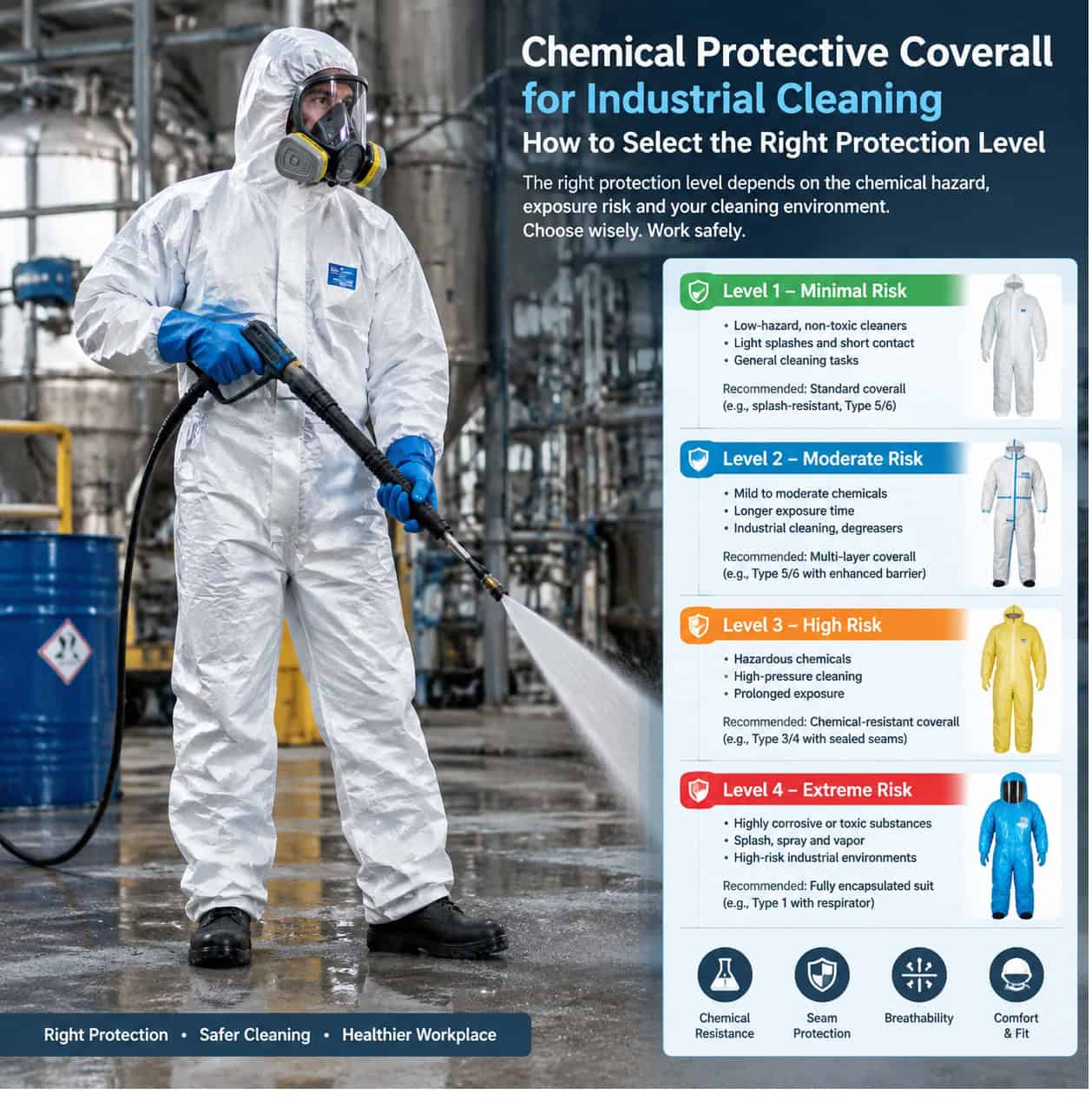
Chemical Protective Coverall for Industrial Cleaning: How to Select the Right Protection Level


Chemical Protective Coverall Most industrial cleaning chemical burns don’t happen because workers skipped coveralls. They happen because someone grabbed the wrong one. A blue suit from the supply closet is not a protection level. It’s a guess. And chemical cleaning is no place for guesses.
START WITH THE CHEMICAL, NOT THE COVERALL

The coverall is the last line of defense, not the first. Before you look at fabric swatches or price breaks, open the safety data sheet. What chemicals are you actually using? Sodium hydroxide in a floor stripper behaves nothing like acetone in a degreaser. A sanitizer that splashes gently from a spray bottle is not the same threat as a caustic solution pumped through a pressure washer.

Look for permeation data, breakthrough time, and degradation ratings. Permeation is the chemical sneaking through the fabric at a molecular level. Breakthrough time tells you how long you have before that happens. Degradation is the fabric losing its strength, stretching, cracking, or dissolving. If the SDS or technical data doesn’t give you those numbers, call the chemical manufacturer. If they can’t tell you, assume the worst and protect accordingly.

MATCH THE COVERALL TYPE TO THE TASK

Not every chemical protective coverall is built for the same exposure. In Europe, the common types are a useful shorthand. Type 6 is for limited liquid splash. Type 5 is for airborne solid particles. Type 4 is spray-tight. Type 3 is liquid-tight. That sounds technical, but the practical difference is huge.

If your crew is wiping down equipment with a mild cleaner, a Type 6 coverall might be enough. If they’re pressure washing a tank with a caustic solution, you’re in Type 3 or Type 4 territory. If they’re cleaning a confined space where liquid can pool, splash, and spray from every angle, a basic splash suit is a false sense of security. The wrong type doesn’t just underperform. It fails exactly when someone needs it most.

SEAMS, ZIPPERS, AND THE WEAK POINTS

A coverall is only as strong as its seams. Stitched seams leave tiny holes. Taped seams, welded seams, and heat-sealed seams close those gaps. For industrial cleaning, where liquid often runs down sleeves and legs, the seams are where the chemical gets in. Check the zipper, too. A bare zipper is a channel. A zipper with a storm flap, and ideally a double flap, is a barrier.

Gloves and boots matter just as much. Gloves should overlap the sleeves or be taped, depending on the suit and the chemical. Coverall legs usually go over the boots to shed liquid. Hoods should fit over the respirator without breaking the seal. Every interface is a potential leak. If you ignore the wrists, ankles, and neck, you’ve built a nice suit with four open doors.

MATERIALS: THERE IS NO UNIVERSAL SUIT

SMS fabric is fine for dust and light splash. Microporous film handles oils, greases, and some aerosols. Tyvek works well for dry particles and certain chemicals. Tychem, PVC, neoprene, and Viton are built for more aggressive chemical exposure. But none of them are universal. A suit that laughs at sulfuric acid may weaken in a solvent. A suit that resists a solvent may soak through with a caustic cleaner.

This is why chemical resistance charts matter. Find the exact chemical, the concentration, and the temperature. Then find the material that holds up. If the chart says “not recommended,” believe it. If the chart has no data, don’t gamble. Industrial cleaning already has enough variables. The coverall should not be one of them.

FIT, HEAT, AND HUMAN FACTORS

A chemical coverall that doesn’t fit is a hazard in two ways. Too loose, and it snags on machinery, tears on corners, or catches in a door. Too tight, and it restricts movement, rips at the shoulders, or forces workers to take it off early. Neither is acceptable.

Heat stress is the silent problem in industrial cleaning. Workers are often in hot rooms, confined spaces, or full sun. A liquid-tight suit can turn into a personal sauna. That doesn’t mean you skip protection. It means you plan for it. Shorter work rotations. Hydration. Cooling towels. Buddy checks. If the suit is breathable, confirm it still meets the chemical resistance you need. Comfort and protection are not enemies, but they do require honest trade-offs.

PHYSICAL HAZARDS COUNT TOO

Chemical protection is the headline, but industrial cleaning also brings abrasion, punctures, cuts, and slips. Reinforced knees and elbows can extend the life of a coverall and prevent a tear that turns into an exposure. Anti-slip boots matter when floors are wet with soap or oil. Cut-resistant gloves may be needed for broken glass, metal shards, or sharp equipment.

Think about how the worker moves. Are they crawling under a tank? Reaching overhead? Kneeling in a puddle? The coverall should support the task, not fight it. If it tears on day one, it’s not protection. It’s a disposable mistake.

TRAINING AND DOFFING ARE PART OF THE PROTECTION LEVEL

You can buy the best coverall on the market and still get a chemical burn if the worker takes it off wrong. Contaminated gloves touch the face. A dirty zipper gets pulled down with bare hands. The suit is rolled into a ball and tossed in a corner. The chemical goes home on skin, clothes, or tools.

Training is not a nice extra. It is part of the protection level. Show workers how to don the suit without contaminating the inside. Show them how to doff it so the contaminated outside never touches skin. Set up a clean area and a dirty area. Have a change-out schedule based on breakthrough time, not on how tired the suit looks.

WHAT TO ASK BEFORE YOU BUY

Before you order a pallet of coveralls, answer these questions. What chemicals are involved? What is the concentration? Is it a splash, spray, immersion, or vapor risk? How long is the task? What physical hazards exist? What are the temperature and ventilation conditions? What type of coverall is required? What material passes the chemical resistance test? Are the seams taped or welded? Do the gloves, boots, and hood integrate cleanly?

If your supplier can’t help you answer those questions, they’re selling you fabric, not protection. A good supplier gives you selection charts, samples, training support, and honest limits. They don’t just ask what size you wear. They ask what you’re cleaning.

THE RIGHT COVERALL IS A CONTROL MEASURE

Price per suit is easy to compare. Risk per task is harder. But that’s the number that matters. A cheap coverall that fails in ten minutes is more expensive than a proper suit that gets the job done safely. The goal is not to buy the heaviest, most expensive option for every job. The goal is to match the protection level to the actual hazard. No more, no less.

Industrial cleaning is unforgiving. Chemicals don’t care about deadlines, budgets, or convenience. Select the coverall by chemical, task, duration, and exposure route. Then train the crew, check the fit, and seal the interfaces. That’s how you turn a disposable garment into real protection.

Industrial Automation Companies Enabling Flexible Production Environments

Flexible production environments help manufacturers respond to changing demands while maintaining efficiency, consistency, and quality. Modern manufacturing processes benefit from adaptable equipment, intelligent machinery, and coordinated workflows that support different production requirements. Industrial automation makes these improvements possible by simplifying repetitive tasks, improving operational visibility, and helping teams manage resources effectively. With the right approach, businesses can create production systems that accommodate new opportunities and encourage continuous improvement.

Adaptable Manufacturing Systems

Industrial automation supports production environments that can adjust to changing product specifications, order volumes, and operational priorities. These capabilities allow manufacturers to organize their processes more effectively while maintaining dependable output.

Key advantages include:

  • Faster production line adjustments
  • Improved equipment coordination
  • Consistent product quality
  • Better resource utilization
  • Simplified workflow management
  • Greater operational flexibility

These improvements help production teams manage diverse requirements without compromising their commitment to accuracy and efficiency.

Supporting Customization and Variety

Modern customers appreciate products that reflect their individual needs. Flexible production systems make customization easier by allowing equipment and workflows to accommodate different configurations. Industrial automation companies contribute to this progress through solutions that support adjustable machinery, precise controls, and efficient material movement.

Manufacturers can benefit from several capabilities:

  • Quick changes between product types
  • Adjustable production sequences
  • Accurate component positioning
  • Efficient handling of varied orders
  • Consistent assembly performance
  • Smooth coordination between workstations

These capabilities create opportunities to deliver personalized products while maintaining organized and productive operations.

Improving Equipment Integration

Connected machinery allows different production stages to operate as a coordinated system. When equipment communicates effectively, manufacturers can manage transitions between tasks with greater precision. Exploring useful technical resources, including https://www.omch.com/es/, can help readers understand industrial automation components and their potential role in adaptable manufacturing environments.

Effective integration can offer important benefits:

  • Synchronized machinery operations
  • Clearer production monitoring
  • Improved process visibility
  • More efficient material transfers
  • Reliable equipment performance
  • Easier coordination across production stages

A well-integrated environment supports smoother workflows and helps teams make informed decisions throughout the manufacturing process.

Enhancing Workforce Productivity

Automation helps employees focus on activities that require judgment, creativity, and specialized knowledge. By assigning repetitive operations to automated equipment, manufacturers can improve task distribution and create more organized working environments.

Important workforce advantages include:

  • Reduced repetitive manual tasks
  • Better allocation of employee skills
  • Improved operational planning
  • More consistent task execution
  • Greater focus on quality checks
  • Opportunities for technical skill development

These benefits encourage collaboration between employees and automated systems, supporting productive and engaging manufacturing operations.

Preparing for Future Growth

Flexible production environments offer a strong foundation for sustainable manufacturing development. As requirements evolve, adaptable systems help businesses introduce new processes, increase capacity, and improve existing workflows without redesigning every operation.

Manufacturers can strengthen long-term readiness through:

  • Scalable equipment configurations
  • Regular performance assessments
  • Preventive maintenance planning
  • Continuous process optimization
  • Efficient energy management
  • Gradual adoption of new capabilities

Building a More Responsive Production Environment

Industrial automation enables manufacturers to combine flexibility, precision, and productivity within a unified operational approach. Adaptable equipment, coordinated processes, and skilled employees help create manufacturing environments that respond confidently to changing demands. By prioritizing integration, workforce development, and continuous improvement, businesses can establish efficient production systems that support customization, consistent quality, and long-term operational growth.

Dependable Stroller Brands Support Relaxed And Convenient Family Journeys

Family journeys become more enjoyable when parents have dependable equipment that supports comfort, mobility, and convenience. Well-designed strollers can make everyday outings easier by providing children with a comfortable place to sit while giving parents practical features for smooth and organized travel.

Comfortable Seating Encourages Relaxed Journeys

A comfortable stroller helps children enjoy longer outings with greater ease. Supportive seating, soft materials, and adjustable positions can create a pleasant environment while allowing parents to focus on enjoying meaningful family moments.

  • Supportive seats encourage comfortable sitting.
  • Soft materials create a pleasant environment.
  • Adjustable positions support changing preferences.
  • Spacious designs allow greater freedom of movement.
  • Comfortable features encourage relaxed outings.

Strong Construction Supports Everyday Reliability

Dependable construction gives parents greater confidence during regular family activities. Strong frames, stable structures, and carefully designed components can provide reliable support while making the stroller suitable for frequent use.

  • Strong frames provide dependable support.
  • Stable structures encourage confident handling.
  • Durable components support regular use.
  • Reliable construction improves everyday convenience.
  • Quality designs support changing family needs.

Smooth Movement Makes Outings Easier

Easy maneuverability can make a significant difference during family journeys. Responsive wheels and balanced designs help parents guide the stroller comfortably while creating a smoother experience for children.

  • Responsive wheels support easy movement.
  • Smooth steering encourages comfortable handling.
  • Stable designs improve overall control.
  • Reliable brakes support secure stopping.
  • Balanced structures make outings more convenient.

Practical Storage Keeps Essentials Organized

Parents often carry useful items during family outings, making convenient storage an important stroller feature. Spacious baskets and accessible compartments can help keep belongings organized while reducing the effort of carrying everything separately.

  • Spacious baskets hold everyday essentials.
  • Accessible compartments simplify organization.
  • Convenient storage keeps items within reach.
  • Practical spaces reduce carrying effort.
  • Organized storage supports smoother outings.

Flexible Features Suit Changing Needs

Children grow quickly, so adaptable stroller features can provide valuable convenience over time. Adjustable seating and flexible designs allow families to enjoy greater usability while supporting different stages of everyday development.

  • Adjustable seating supports growing children.
  • Flexible designs suit changing routines.
  • Adaptable features improve long-term convenience.
  • Multiple settings encourage personalized comfort.
  • Practical adjustments support family flexibility.

Safety Features Build Greater Confidence

A reliable stroller should provide parents with confidence while children enjoy comfortable journeys. Secure harnesses, stable frames, and dependable braking features contribute to a reassuring experience during regular travel and family activities.

  • Secure harnesses support comfortable positioning.
  • Stable frames encourage dependable use.
  • Reliable brakes provide greater control.
  • Protective designs support parental confidence.
  • Thoughtful features encourage peace of mind.

Dependable Strollers Create Positive Family Experiences

Dependable stroller brands bring together comfort, reliability, flexibility, and practical design to support smoother family journeys. Parents exploring https://www.riverbabygroup.com/de/ can find another useful reference when considering stroller-related options. With thoughtful features and dependable construction, quality strollers can help families enjoy relaxed outings, easier movement, and greater convenience throughout their daily adventures.

Balanced Suspension Setups Help Create Refined Vehicle Driving Experiences

A vehicle’s suspension system plays an essential role in shaping ride comfort, handling, and overall driving quality. A balanced setup helps the vehicle respond smoothly to road variations while maintaining predictable control during everyday journeys. By selecting compatible components and appropriate settings, drivers can enjoy a refined experience that combines comfort, stability, and dependable performance across different driving conditions.

Smooth Ride Quality Enhances Everyday Comfort

A well-matched suspension system helps manage movement between the wheels and the vehicle body. Suitable springs, shock absorbers, and supporting components work together to create a comfortable ride while helping maintain consistent contact with the road.

  • Quality Shock Absorbers: Suitable dampers help control unwanted bouncing and excessive movement.
  • Compatible Springs: Proper spring selection supports the vehicle’s weight and intended use.
  • Reduced Road Disturbance: Balanced components help manage bumps and surface variations.
  • Consistent Ride Height: Appropriate settings support a coordinated vehicle stance.
  • Comfortable Journeys: Correct suspension tuning contributes to a more pleasant driving experience.

Stable Handling Supports Driver Confidence

Suspension balance influences how a vehicle responds when steering, braking, and navigating curves. Carefully selected components help maintain predictable movement, allowing drivers to enjoy a controlled driving experience without sacrificing everyday practicality.

  • Improved Steering Response: Suitable suspension settings support consistent directional control.
  • Balanced Cornering: Compatible components help manage body movement through turns.
  • Predictable Vehicle Behavior: Proper setup encourages consistent responses to driver inputs.
  • Effective Wheel Contact: Appropriate suspension movement helps tires follow road contours.
  • Coordinated Components: Matching parts helps create a more harmonious handling experience.

Component Compatibility Encourages Reliable Performance

Custom Wheels And Tires

Every suspension component contributes to the system’s overall operation. Choosing parts that work together helps preserve the intended geometry, support appropriate movement, and create a setup suited to the vehicle’s specifications and driving requirements.

  • Correct Spring Rates: Suitable spring characteristics help support the vehicle’s load.
  • Appropriate Damper Selection: Compatible dampers help manage spring movement effectively.
  • Careful Alignment: Proper wheel alignment supports stable handling and even tire wear.
  • Quality Mounting Hardware: Suitable fittings help maintain secure component installation.
  • Professional Assessment: Experienced technicians can evaluate compatibility and setup requirements.

Maintenance Helps Preserve Suspension Balance

Regular inspections allow drivers to monitor suspension condition and identify maintenance needs before they affect the driving experience. Consistent care also helps protect connected components and maintain the benefits of a carefully balanced setup.

  • Routine Inspections: Checking suspension parts helps identify visible wear or damage.
  • Alignment Checks: Periodic assessments help maintain appropriate wheel positioning.
  • Tire Condition Monitoring: Even tread wear can provide useful information about vehicle setup.
  • Secure Connections: Inspecting mounting points supports dependable operation.
  • Timely Servicing: Addressing developing concerns helps preserve driving quality.

Explore Suspension Options For Your Vehicle

Selecting suitable suspension upgrades begins with understanding the vehicle’s specifications, intended use, and preferred ride characteristics. Exploring https://www.blackjackspeedshop.com/new-braunfels/lift-kits-and-suspension/ can help drivers review available options for creating a personalized setup. Balanced suspension systems bring comfort, handling, and practicality together through compatible components and thoughtful installation. With appropriate tuning and regular maintenance, drivers can enjoy a more refined vehicle experience that supports confident control, consistent performance, and lasting driving satisfaction.

Convention Center Parking Arrangements Encourage Efficient Event Transportation

Efficient transportation plays an important role in creating a smooth and enjoyable event experience. Well-planned parking arrangements help visitors arrive comfortably, manage their schedules, and move between transportation areas with greater convenience. By combining clear directions, organized spaces, and thoughtful planning, event parking can support better coordination and allow attendees to focus on the activities they came to enjoy.

Organized Parking Supports Smooth Arrivals

A well-structured parking area helps visitors understand where to go when they reach an event venue. Clear signs, convenient entry points, and organized vehicle movement make arrival easier while creating a welcoming first impression for attendees.

  • Clear Directions: Helpful signs guide drivers toward appropriate parking areas.
  • Efficient Entry: Organized access points support a smoother arrival process.
  • Better Coordination: Structured parking reduces confusion during busy periods.
  • Comfortable Access: Convenient routes help visitors reach event entrances easily.

Advance Planning Improves Transportation Efficiency

Preparing for parking before travelling helps attendees make informed decisions and manage their time effectively. Reviewing available options and allowing sufficient travel time can make the journey more predictable, particularly when several activities are scheduled throughout the day.

  • Early Preparation: Checking parking information helps visitors plan their routes.
  • Flexible Scheduling: Extra time allows attendees to arrive without rushing.
  • Route Awareness: Understanding access points supports easier navigation.
  • Improved Readiness: Organized plans help visitors begin their activities confidently.

Multiple Transportation Options Encourage Flexibility

Effective event transportation can accommodate visitors who travel in different ways. Coordinated parking, designated passenger drop-off areas, and convenient connections to other transportation options help attendees choose arrangements that suit their preferences and schedules. Attendees can prepare for a convenient arrival by checking parking details and planning their transportation in advance through https://www.aplusexpo.com/mandalay-bay-convention-center-parking/.

  • Shared Travel: Carpooling helps groups coordinate their journeys conveniently.
  • Passenger Drop-Offs: Designated areas support smooth arrivals for guests.
  • Group Transportation: Coordinated travel arrangements simplify visits for larger groups.
  • Flexible Choices: Different transportation options make event access more convenient.

Clear Parking Management Strengthens Coordination

Thoughtful parking management helps maintain orderly movement throughout an event. Clearly marked routes, suitable space allocation, and helpful guidance allow drivers and pedestrians to navigate more comfortably while supporting an efficient transportation experience.

  • Defined Parking Zones: Organized sections help drivers identify suitable spaces.
  • Pedestrian Guidance: Marked walking routes support convenient movement toward entrances.
  • Departure Planning: Clearly indicated exit routes make leaving easier.
  • Helpful Assistance: Available guidance helps visitors resolve parking questions quickly.

Efficient Parking Creates Lasting Event Experiences

Convenient transportation contributes to a positive impression of the entire event. When parking arrangements are clear and practical, attendees can spend more time participating in activities, connecting with others, and enjoying meaningful experiences rather than worrying about their journey.

  • Improved Time Management: Smooth parking helps visitors follow their schedules.
  • Greater Comfort: Organized arrangements encourage a relaxed event experience.
  • Positive Impressions: Convenient access adds value to the overall visit.
  • Better Coordination: Efficient movement benefits visitors throughout the day.

Ultimately, well-planned convention center parking encourages efficient event transportation by bringing together organization, accessibility, and convenience. With advance preparation and clear parking guidance, attendees can enjoy smoother arrivals, comfortable movement, and easier departures. These practical arrangements help make every event visit more productive, welcoming, and enjoyable.


Machine Safety Expertise Supports Better Workplace Risk Management

Strong machine safety expertise helps professionals approach workplace responsibilities with greater awareness, confidence, and consistency. Practical knowledge supports effective risk management by encouraging careful planning, responsible equipment use, and positive safety habits that contribute to organized operations.

Strengthen Workplace Safety Awareness

Machine safety knowledge gives employees a clearer understanding of responsible equipment practices. When professionals understand essential safety principles, they can approach daily activities with greater confidence and contribute positively to a well-organized working environment.

  • Builds awareness of important machine safety principles.
  • Encourages careful attention to equipment-related activities.
  • Supports consistent use of established safety procedures.
  • Helps professionals understand their safety responsibilities.
  • Promotes positive attitudes toward responsible workplace practices.

Improve Risk Identification Skills

Effective risk management begins with recognizing potential areas that require attention. Machine safety expertise helps professionals observe equipment and work processes carefully, creating stronger awareness and supporting proactive approaches to workplace safety.

  • Encourages detailed observation of work areas.
  • Helps identify potential machine-related risks.
  • Supports careful evaluation before beginning tasks.
  • Promotes awareness of changing workplace conditions.
  • Builds confidence in proactive risk management.

Support Better Safety Planning

Good preparation creates a strong foundation for safe and efficient operations. Machine safety education helps professionals organize tasks thoughtfully while considering appropriate procedures, responsibilities, and protective practices before equipment activities begin.

  • Encourages structured preparation for machine-related tasks.
  • Supports clear understanding of operating procedures.
  • Helps professionals plan activities with greater awareness.
  • Promotes consistent attention to safety requirements.
  • Develops practical approaches to responsible equipment use.

Encourage Confident Decision-Making

Professionals can make more informed decisions when they have strong machine safety knowledge. Practical expertise helps employees respond thoughtfully to workplace situations while maintaining a positive focus on safe, organized, and efficient operations.

  • Strengthens confidence during equipment-related activities.
  • Encourages careful consideration before making decisions.
  • Supports appropriate responses to identified risks.
  • Helps employees follow procedures consistently.
  • Promotes responsible choices during changing conditions.

Strengthen Team Communication

Effective communication contributes to strong workplace risk management. When employees share safety information clearly, teams can coordinate responsibilities more effectively and maintain consistent practices throughout machine-related activities.

  • Encourages open discussion about safety procedures.
  • Supports better coordination among team members.
  • Promotes shared understanding of workplace responsibilities.
  • Helps employees communicate important operational information.
  • Builds teamwork around common safety objectives.

Encourage Continuous Learning

Machine safety expertise grows through regular education and practical reinforcement. Continuous learning allows professionals to refresh important knowledge, strengthen existing skills, and remain confident when responsibilities or workplace processes develop.

  • Reinforces essential machine safety knowledge.
  • Encourages regular review of established practices.
  • Supports ongoing improvement in professional capabilities.
  • Helps employees adapt confidently to new responsibilities.
  • Promotes a long-term commitment to safety awareness.

Develop Professional Expertise

Focused learning provides professionals with valuable knowledge for managing machine-related responsibilities effectively. Training such as Machineveiligheid training Haarlem can support structured development by connecting safety principles with practical workplace awareness and responsible decision-making.

  • Strengthens professional understanding of machine safety.
  • Builds confidence through focused education.
  • Encourages thoughtful approaches to workplace risks.
  • Supports dependable and consistent operational practices.
  • Creates opportunities for continued professional development.

Build A Positive Safety Culture

Strong expertise can help make safety a natural part of everyday workplace activities. When professionals understand the value of responsible practices, they can contribute to a culture that emphasizes awareness, cooperation, preparation, and continuous improvement.

  • Encourages proactive participation in safety activities.
  • Makes responsible practices part of daily routines.
  • Supports cooperation through shared safety goals.
  • Promotes consistent workplace awareness.
  • Strengthens operational confidence through knowledge.

Machine safety expertise provides a valuable foundation for better workplace risk management. Through practical knowledge, continuous learning, clear communication, and thoughtful preparation, professionals can support safer, more organized, confident, and efficient working environments.